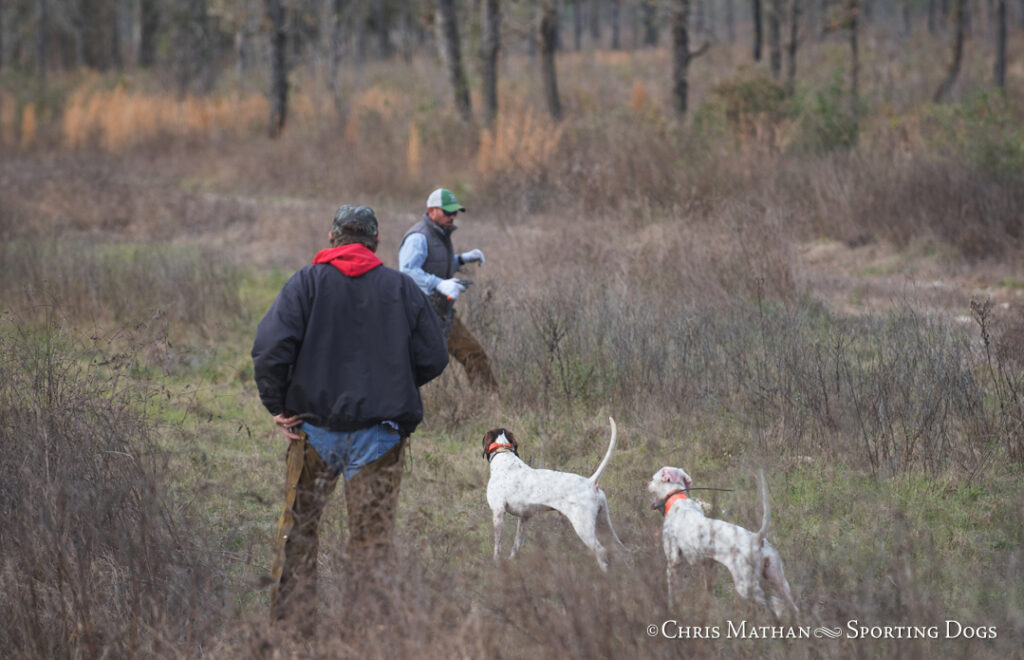
In the summer of 2015, I received a poignant hand-written message from a granddaughter of a former head dog trainer-quail hunt manager of a large quail plantation in the “Quail Belt” between Albany, Georgia and Tallahassee, Florida. She and the grandfather were unknown to me.
In her message, she explained that her grandfather, my age, had a bucket-list wish to attend the Florida Open All-Age Championship and observe it from atop the dog truck with me. She explained the grandfather had in the 1960s held his plantation post ten years, then when the plantation owner died returned to his home county in Northern Virginia where he spent the rest of his working years in the employ of an electric utility supervising a right-of-way maintenance crew.
To prove her grandfather’s bona fides, she sent me a letter received by him from the CEO of the utility on his retirement , commending his supervisor work.
She said her grandfather’s desire was fueled by his memories of his plantation years and reading my reports on the Florida Championship in the American Field. I immediately called her and said we would be delighted to have him join us atop the dog truck, which followed the field trial action at Chinquapin Farm close behind the judges.
What followed in January 2016 and again in January 2017 was delightful for me. Her grandfather was quite short, maybe 4’ 10” and as grizzled with age as I was. He loved the trial action, and was filled with vivid memories and stories of his plantation years, which he recounted with enthusiasm and appreciation for his employer and his colleagues, all of whom save him were black. He got to observe standout performances by Champions Chinquapin’s Reward and Dominator’s Rebel Heir and Runners-Up Dominator’s Dotted Line and Dunn’s Tried ‘N True.
His employer was a descendant of a Robber Baron of the Gilded Age, many of whose get also proved adept at preserving and growing their wealth. He was a dedicated quail hunter, to put it mildly. He hunted six days a week, with a different guest family each week of the season staying at his plantation Big House. (Two day-and-a-half hunts a week are customary on the quail plantations I know of).
His plantation employed the customary plantation mule-drawn hunting wagon, two horseback guns, a mounted dog handler and two mounted scout-horse holders for its hunts. Unique was its use of Passo Finos rather than Tennessee Walkers.This was ideal for my companion in light of his height.
Rather than travel to northern prairie states or Canada for summer dog training, my companion summer trained in Virginia, returning to the plantation just before quail season’s opening with the hunting string. He acquired pointer pups to train from a well known field trialer-breeder in Mississippi. He was quite proud of the quality of his shooting string and retrievers which he also summer trained in Virginia.
For the last season he worked on the plantation, he took with him his teen-age son as an assistant, who proved quite adept and a favorite of his employer. Then his employer died suddenly, the plantation passed to his son, and my companion was out of a job.
I encouraged my truck-top companion to write down his plantation stories and send them to me for comments. He did so and I returned them with light edits. He responded by saying I was welcome to do with the stories as I pleased. Then sadly I received word from his granddaughter that he had died in his sleep, not a bad way to go at our age.
I next sent the stories to the son of his plantation employer, asking permission to publish the stories without identifying their author or the plantation or his father. The author had been especially protective of his employer’s privacy. I never received an acknowledgment of my request.