By David A. Fletcher
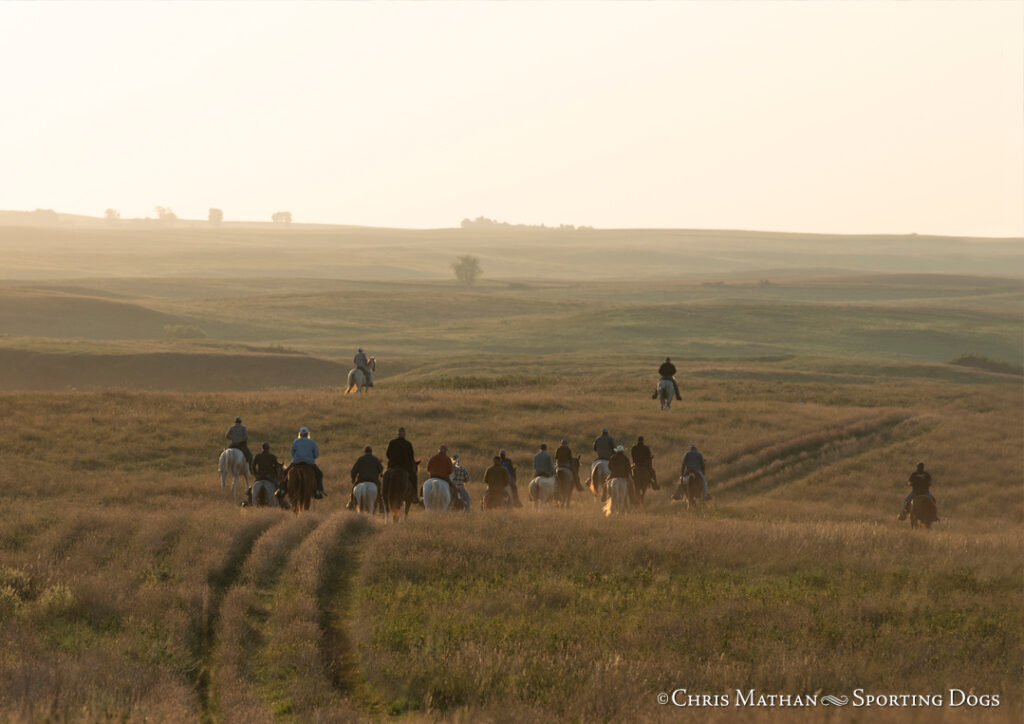
I fondly remember two Southwestern Championships. The 1967 Championship, a premier event on the major circuit, was held near Booneville, Arkansas starting November 20, over what was called the “Sanitorium Grounds”. This was my first assignment working for the American Field as a full-time reporter on staff in the southern United States. I knew well the 30 or so professional trainers who came to the Canadian prairies each summer, and many of them attended the Southwestern. I knew little about Quail habitat and what competitive bird dogs had to do to find and point them. I was starting a learning process on wild Quail events. I had reported four years as a part time reporter for the FIELD in Canada, covering the All America Chicken Championship at Broomhill, Manitoba, the Dominion Chicken Championship at Gainsborough, Saskatchewan, the Border International Chicken Championship at Frobisher, Saskatchewan, the Saskatchewan Chicken Championship at Mortlach, as well as the US Chicken Championship at Solon Springs, Wisconsin, all while I was a resident of Calgary, Alberta. Those huge events were all on native Sharptailed Grouse and Hungarian Partridge, no QuaiI, wild or released. I had hunted wild Quail only a time or two in Canada’s western Ontario province, perhaps 50 miles east of Detroit.
In September of 1967, at the end of the US Chicken Championship I was requested to fly to Chicago where Bill Brown, editor and owner of the American Field picked me up at O’Hare airport, took me to his home for the weekend and hired me as a full time American Field staff reporter. After the hiring I went to the US Embassy in Calgary, got a green card to work in the United States and took all my personal belongings to my parents’ home in Ontario. Next was a flight from Toronto to Chicago’s O’Hare where Bill Brown met me and gave me my schedule and some cash to operate with, and I went on to Little Rock where Mary Oliver met me and drove me to Booneville.
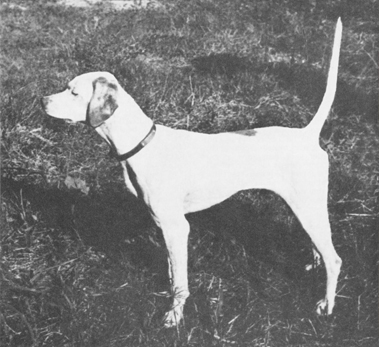
White Knight’s Bullet, handled by Hoyle Eaton, winner of the 1967 Southwestern Championship
The Southwestern Championship was a very popular event on the major circuit. It featured a one-hour qualifying series and a two-hour final series. The 1967 Championship had 34 Pointers and 6 Setters and was judged by J.S. Dickinson, Joe Hurdle and Hamlet Yarborough. White Knight’s Bullet was the winner owned by Mannes Bartlett, of Pascagoula, Mississippi, handled by Hoyle Eaton. In the one hour qualifying series Bullet was not showy, he dug for the remote places heavy with briars, found and handled two bevies immaculately. In the final series and a different course he reached deeper, showed well and logged 6 perfect bevy finds and a back of bracemate.
Volcanic Butch was Runner-Up owned by J.J. Stark, of Girard, Kansas, handled by Stub Poynor. This warrior was aggressive in his search, made wide forward moves and found two bevys, perfect style and manners. In the final series his aggressive search of the briary places continued and he logged a pair of well-handled finds.
It might be interesting to name the finalists and their handlers. Saxon (Eaton) with Volcanic Butch (Poynor), Tailgate(Covington) with Red Water Rex (Eaton), White Knight’s Bullet (Eaton) with David of Caddo (Poynor), Kansas City Jake (Daugherty) with Johnny Crockett (WC Kirk), Raney’s John (Epperson) with John Hogan Boy (Allen), Warhoop Judy Suzette (Poynor) with Pistol Packing Mama (Loftin). Riggins White Knight was also in the qualifying field but missed the callback series.
The Arkansas State Tuberculosis Sanitorium property consisted of 12,500 acres, portions cleared purposely for cattle pastures, a necessity for the production and purification of beef and milk for the patients, at their peak numbered at 4000. The cattle pastures had brushy, briar clad hedgerows, a refuge for Quail to fly to when they were disrupted from feeding in open places, also many woods edges. There were also open oak woods and a distinctive pine clad escarpment named Henscratch Ridge which the six one-hour courses crossed twice a day. The site also was a huge briar patch, certainly a factor in which dogs were brave enough to crash the briars and get somewhat remote coveys of Quail found and pointed. There were 40 fenced feed plots on the venue. Southwestern Arkansas was a premier field trial locale from the 1940s when men like T.H. Lipscomb, Dr. J.D. Riley, and Ed Garner began staging major field trials and this group also secured the Sanitorium grounds and had the state designate it as a state game refuge. However, problems lay ahead for field trials at the Sanitorium grounds. Science was curing tuberculosis and country wide many Sanitorium facilities were being dismantled and the land sold. The public saw little need for these rather large facilities as tuberculosis was in remission and being served by fewer and smaller facilities.
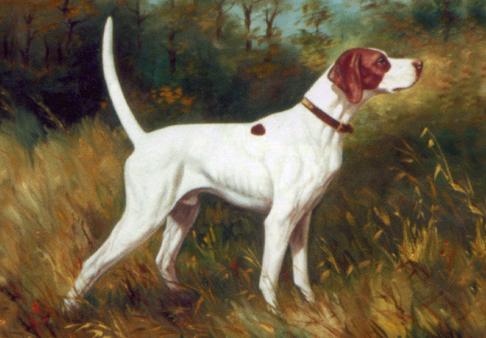
Red Water Rex, handled by Hoyle Eaton, winner of the 1968 Southwestern Championship
Moving now to the 1968 Southwestern Championship which was also held over the Sanitorium grounds. Trial date was Nov. 18, with a field of 45 dogs, 37 Pointers and 8 Setters, judged by repeat judges from 1967, Joe Hurdle and Hamlet Yarborough. Winner was 7-year-old Red Water Rex, owned by E.B. Alexander and W.T. Pruitt, of Jackson, MS, handled by Hoyle Eaton. It was the 4th Championship plus one Runner-Up title for Rex. The dog was on the brilliant side in hunting effort and scope of his search and logged two perfect finds and an unproductive, in the qualifying series, all without a bracemate to spur his competitive edge. In the final series Rex reached into the heavy briars, bloodied his chest, but found and pointed four Bevies and the longer he was down the stronger his effort became. Rex’s field trial record is remarkable. He was Runner-Up at the National Derby Championship, won the Missouri Open Championship and the Continental Championship twice and on the Canadian prairie won the Saskatchewan Open Chicken Championship.
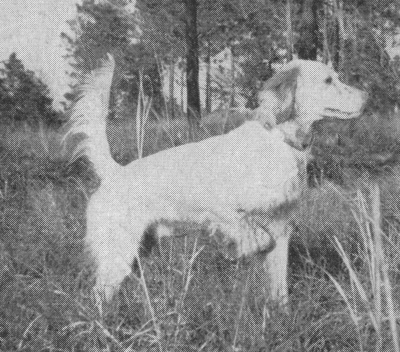
Inspector Turnto’s Man, handled by Ernest Allen, runner-up of the 1968 Southwestern Championship
Runner-Up was a 4-year-old Setter, Inspector Turnto’s Man, owned by Jack Ward and handled by Ernest Allen, both of Nacadoches, Texas. Man had a powerful hour in the qualifying series highlighted by two covey finds, then in the two-hour finals had perhaps the strongest hunting effort of the ten callbacks. Man had a perfect covey find in the final series and mannerly work on a domestic chicken. Here is a listing of the dogs called to the final two-hour series. Redwater Rex, Eaton, with Royal Heir, Gates, Inspector Turnto’s Man, Allen, with Huckleberry Dan, Poynor, Fisher’s Wayriel Ernie, WC Kirk, with The Hurricane, Gates, White Knight’s Bullet, Eaton, with Fast Jake Delivery, Gates. Volcanic Butch, Poynor, with Gunsmoke’s Admiration, Howard Kirk.
To repeat, the Southwestern was an important event on the major circuit. Their two-hour final series was a gem for the dog that could win it. Some of the top owners in the country had their dogs there, and just to mention a few, dogs such as Haberdasher’s Royal Ace. Dr, W.H. McCall, Boomtown, Dan Bonaguidi, Doctor’s Stormy Mack, Dr. D. W. Hawthorne, Stormaker, Dr. Minor Gordon, and Gunsmoke’s Admiration, Howard Kirk competed. Hospitality at their restaurant and for noontime lunches were Ted and Virginia McMaster. Woodrow Wilson celebrated 19 years as course marshal and Scotty Mott drove the dogwagon a host of years.
Later in my reporting career as an American Field staff reporter or later as an invitee, I reported a number of trials that were beyond the one-hour heat designation. I reported the three-hour Free-For-All Championship for 14 years at Jimmy Hinton’s plantation, in Alabama, and Delmar Smith’s International Endurance Championship in Oklahoma several years, and of course the National Championship at Ames Plantation has long been a three-hour national fixture. I am a fan of two-and three-hour field trials. I give great credit to the stalwarts who established, managed and inaugurated many years ago, the Southwestern Championship having a two-hour final series. It was an important major circuit event. Heats of two and three hours give a great evaluation and insight into the dogs competing from many aspects, physical, mental and the will and desire to hunt longer than one hour is a huge factor in breeding future generations of bird dogs with the superb qualities they possess, and hopefully carry on to their progeny.
A Few Sidelights
My first morning riding the Southwestern was eye opening for me about Quail and Quail dogs. I came into the clubhouse for lunch but something was amiss in my digestive system. I had some eggs for breakfast and they must have been bad for I was quite sick. Mary Oliver spotted me reclining on a couch and immediately took me to the Sanitorium hospital where the staff doctors gave me a thorough going over. I spent the afternoon there but the suspected food poisoning was over by morning.
I was in the same motel as many of the trainers and Hoyle Eaton was next to my room. Riggins White Knight was often on a chain on the motel front lawn and I would sit and pet him on many occasions. He was very sociable and loved the attention. Visiting Hoyle in his room I watched Hoyle treating Red Water Rex for the many bleeding gashes on his chest. This brave dog would never let briars stop him from reaching back into the thick briar places and finding and pointing Quail.
My next reporting assignment was the Quail Championship Invitational at Paducah, Kentucky a few days ahead. Hoyle suggested I travel from Booneville, Arkansas to Booneville, Mississippi and spend a day or two with him and his wife Betty, and then ride to Paducah with him. It was a good arrangement for me. I rode with him a couple of days working dogs in Mississippi then got in that big red truck with all the dogs and horses along with scout Tommy Olive and we went to Paducah. I had to sit in the cramped middle cab space in the truck and it was my job to change gears. I became pretty accomplished at gear changing on big trucks.
Many notable names were involved in putting on the Southwestern Championship. Dick Dumas, judge of the National Championship many times was President supported by his Board, Max Mehlberger, N. Dunn, H.E. Bates, and Woodrow Reynolds. Mary Oliver was very active with the Club but her fame actually came from her breeding and campaigning great dogs such as The Arkansas Ranger, John Oliver, Lisa of Arkansas and many others whose names from memory I can only say included “of Arkansas”. For many years I had in my home a “field trial billboard” prominently displayed was a print of Mary Oliver and I standing on the porch of the Clubhouse. There was a pretty brook close by and when I asked her about it, she replied “that’s Fletcher Creek”. Ed Soph of English Setter fame was there and I had long discussions with him as well as owners, E. B. Alexander, Jack Payne, Hank Sheely and Dr. Nicholas Palumbo. There were many others there as owners that I got to know well at later events. Judges Dickinson, Hurdle and Yarborough had all judged in Canada at the Chicken Championships and I knew them well.